Foot Health & Custom Orthotics Blog
Explore articles and expert insights on foot biomechanics, custom orthotic design, posture correction, and pain prevention written by Dr. Milt Stern.
Understanding Orthotics: A Beginner's Guide
Published on October 17, 2023 | By Dr. Milt Stern
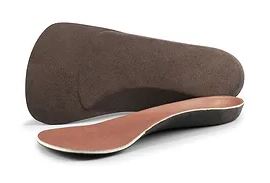
Orthotics are specialized prescription devices designed to support and enhance the function of your musculoskeletal system, particularly the feet, ankles, and legs. They play a crucial role in restoring mobility, alleviating joint strain, and correcting abnormal biomechanical issues. Whether you are an athlete, spend long hours standing at work, or enjoy an active retirement, orthotics can significantly improve your everyday quality of life.
What Are Custom Orthotics?
Orthotics are biomechanically contoured inserts placed inside your footwear to optimize foot mechanics and posture. They are specifically crafted to:
- Correct or control excessive pronation and abnormal gait patterns.
- Provide targeted arch support and shock absorption to relieve chronic foot and lower body pain.
- Offload pressure from sensitive areas such as painful calluses, bunions, or bone spurs.
Over-the-Counter Inserts vs. Custom Orthotics
Over-the-Counter (OTC) Inserts: Mass-produced arch supports available at retail pharmacies provide temporary, generalized cushioning. However, because they are made from flexible materials that flatten easily, they cannot correct structural biomechanical misalignments.
Custom Orthotics: Individually designed from a 3D impression or cast of your feet, custom orthotics are prescribed to match your exact structural anatomy. They provide rigid structural control, durable materials, and long-term correction of chronic alignment issues.
Do Orthotics Fit in All My Shoes?
Published on April 17, 2024 | By Dr. Milt Stern
.jpg)
A common question patients ask is whether a single pair of custom orthotics will fit into every shoe in their closet. While one pair can fit seamlessly into similar styles of footwear, different shoes place distinct space constraints on an orthotic design.
Athletic Running Shoes: Running orthotics are usually full-length (extending to the tips of the toes), featuring a deep heel cup, wider medial Schaffer plate, and external rearfoot post for maximum motion control and shock absorption.
Lace-Up Oxfords & Boots: Everyday walking or dress shoes typically accommodate a 3/4-length design ending behind the metatarsal heads, allowing optimal arch control without crowding the toe box.
Dress Loafers & Flats: Slimmer dress shoes require narrower, low-profile orthotics without external posting so the heel does not slip out of the shoe.
While one orthotic can often cross over between sneakers and tie dress shoes, specialized footwear like high heels or low-profile flats require tailored designs. That is why Orthotics4U offers discounted additional pairs so you have dedicated support for every footwear style.
How Custom Orthotics Can Improve Your Life
Published on August 17, 2024 | By Dr. Milt Stern
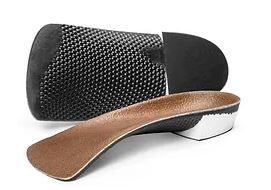
Custom orthotics are engineered to match the precise contours of your feet, providing tailored biomechanical realignment. Unlike mass-produced inserts, custom orthotics address the root cause of foot strain, delivering significant benefits across your whole body:
- Targeted Pain Relief: By placing corrective support under the subtalar joint and midfoot, orthotics relieve strain from plantar fasciitis, Achilles tendonitis, and arthritis.
- Weight Redistribution: Custom contours distribute body weight evenly across the entire plantar surface, eliminating localized high-pressure hot spots.
- Kinetic Chain Realignment: Controlling excessive foot pronation stops the inward rotation of the ankle, knee, and hip, frequently resolving chronic lower back pain.
- Injury Prevention & Durability: High-grade polyolefin shells absorb impact forces, protecting joints during physical activity and reducing overuse injuries.
Plantar Fasciitis Relief: How Custom Orthotics Target Heel Pain at the Source
Published on May 10, 2025 | By Dr. Milt Stern
Plantar fasciitis is one of the most frequent causes of severe heel pain, characterized by sharp, stabbing pain during your first steps in the morning. The condition stems from micro-tears and repetitive stress on the plantar fascia—the thick band of tissue running along the bottom of your foot connecting your heel bone to your toes.
The Biomechanical Cause of Plantar Fascia Strain
When your foot overpronates (flattens excessively upon landing), the arch elongates, forcing the plantar fascia to stretch beyond its normal length. Over time, this constant mechanical traction causes chronic inflammation at the heel insertion site. Soft foam store-bought pads might cushion the heel temporarily, but they fail to stop the overpronation that causes the stretch.
How Custom Orthotics Treat Heel Pain
A podiatrist-designed custom orthotic features a rigid medial arch structure combined with a deep heel cup. This structural combination holds the calcaneus (heel bone) stable and maintains arch height during weight-bearing activities. By stopping excessive pronation, the orthotic takes tension directly off the plantar fascia ligament, allowing micro-tears to heal permanently.
Orthotics for Golfers: Improving Alignment, Balance, and Weight Transfer
Published on March 14, 2026 | By Dr. Milt Stern
Golf requires repetitive torsional force, torque, and weight transfer across both feet during every swing. Walking four to five miles over 18 holes places substantial endurance demands on your feet. For golfers suffering from foot fatigue, knee stiffness, or lower back soreness, custom orthotics can be a game-changer.
Address Alignment and Swing Stability
Proper golf mechanics start from a stable foundation at address. If one or both feet roll inward (pronation), your lower body alignment shifts, affecting your knee flex and hip turn. Custom orthotics lock the foot into a neutral biomechanical position, providing a solid, stable base during backswing and downswing weight transfer.
Reducing Fatigue Through 18 Holes
By stabilizing the subtalar joint and supporting the foot arches, custom golf orthotics prevent premature arch collapse during long rounds. The result is improved energy transfer into the golf ball, consistent stance posture, and reduced fatigue in the feet, knees, and lower back through the 18th hole.
The High Cost of Orthotics: What You Are Really Paying For
Published on April 9, 2026 | By Dr. Milt Stern
Patients often express surprise when they discover that custom prescription orthotics cost anywhere from $400 to $800 at a traditional podiatry clinic, while store-bought over the counter insoles cost under $50. Understanding what goes into making a true custom orthotic helps clarify why that price tag exists—and why direct-to-patient podiatry models are changing the landscape.
Clinical Evaluation vs. Store-Bought Insoles
Over-the-counter insoles are stamped from soft, mass-produced foam or gel. While they feel comfortable initially, they provide no structural rearfoot or midfoot correction. Custom orthotics are engineered from a comprehensive biomechanical evaluation, physical impression, or 3D scan. You are paying for a trained medical specialist's expertise to evaluate joint mobility, leg length differences, and gait abnormalities.
Prescription Manufacturing and Durable Materials
Unlike retail insoles that break down within months, custom orthotics use high-density polyolefin, carbon fiber, or graphite shells built to withstand years of heavy wear. Medical central laboratories craft each pair to exact prescription degrees of posting, heel cup depth, and forefoot accommodations. At Orthotics4U, by utilizing specialized direct consultations, we deliver these identical prescription laboratory orthotics for $225—giving you full custom medical precision without the traditional clinical markup.
Beyond the Feet: Improving Posture and Joint Alignment
Published on September 12, 2026 | By Dr. Milt Stern
When people consider orthotics, they almost exclusively think of foot pain, heel spurs, or arch fatigue. However, your feet serve as the structural foundation for your entire skeletal frame. When foot biomechanics are faulty, the resulting misalignment travels upward through your ankles, knees, hips, and lower back.
The Kinetic Chain Effect
Think of your body as a multi-story building. If the foundation tilts, the structural beams on higher floors experience abnormal strain. When your foot overpronates (rolls inward and flattens), it causes the tibia (shin bone) and femur (thigh bone) to rotate inward. This internal rotation shifts the kneecap out of alignment, tilts the pelvis forward, and forces the lower spine into exaggerated curvature.
Realigning Joints from the Ground Up
By placing a custom orthotic under the foot, we hold the subtalar joint in its neutral position during full weight-bearing gait. Correcting this base angle prevents inward knee collapse, stabilizes pelvic orientation, and relieves tension on lower back muscles. Realignment from the ground up proves that supporting your feet is often the missing key to resolving chronic joint and back discomfort.
Ready for Better Foot Health?
Learn more about our evaluation process or start your custom orthotic order today.
Our 3-Step Process
Order Custom Orthotics ($225)
 Orthotics4U